

КАНДОМБЛЕ
Бе топла звездна нощ, небето тъмно синьо.
Стоим и чакаме пред входа Сержо Пасариньо.
Той е колега, архитект тук в Салвадор,
Избран е за съветник – вереадор.
И не след дълго тихо спря пред нас
Един фолсваген, чу се женски глас.
Подаде се откъм страната на шофьора
Главата руса на жена му Лора.
Тя махна със ръка да се качим.
След миг след нас остана само дим.
Те бяха много интересна двойка-
Той тих и деликатен, а тя – бойка.
Шофираше безумно смело,
А за терена на града това бе лудо дело.
Препускахме по улиците тъмни,
Целта ни бяха хълмовете стръмни,
С накацали една до друга къщи бели,
Бедняшки лабиринти и фавели.
Отивахме на нощен ритуал,
Обвит във тайнствено-мистичния воал,
На свойта древност, легендарна слава,
Чиято жизненост до днеска продължава.
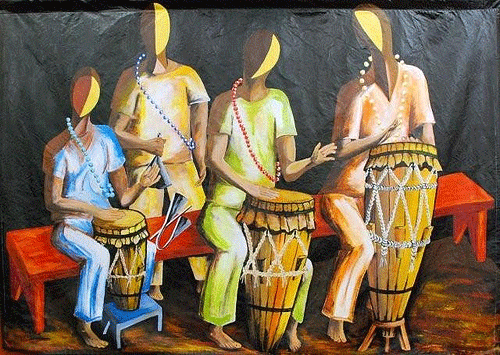
Ний бързахме за кандомбле –
На Йеманджа то посветено бе.
Поканила ни бе самата черна жрица,
Която бе на почит тук като кметица.
♦♦♦
——————————————————————————————————————————————————————————————————————————-
Какво е кандомбле е трудно да се каже.
Това е африкански култ, митичен, важен…
А Йеманджа Велика е богиня – на Вълната,
На Океана, на Реките, на Луната,
На Изворите и на Светлината,
на всичките Ориша, на Земята,
на всичко живо и на цялата Вселена,
която пак от нея е родена.
♦♦♦
Бе септемврийска нощ, на пролетното равноденствие.
От идващата Примавера чакаше се благоденствие.
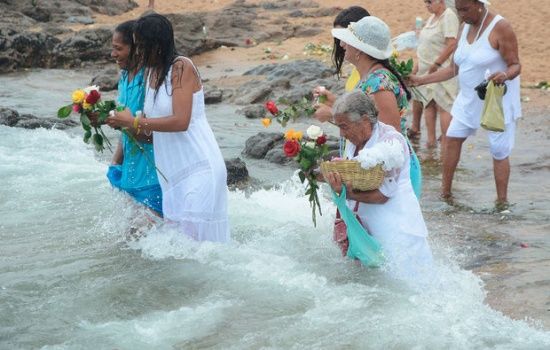
И както подобава – трябват жертвоприношения,
След този ритуал започват и безброй дарения
Засипват океана – майката богиня Йеманджа,
С любимите й рози и безброй цветя, цветя, цветя…
———————————————————————————————————————————————————————————————————————————
♦♦♦
И ето че пристигнахме пред малка къща
На прага ни очаква и поред прегръща
самата жрица. В рокля снежно бяла,
с волани и дантели, в блясък засияла,
на алабастровата шия с бисерната огърлица,
тя сякаш е изящна статуетка, а не жрица.
Със жестове широки и любезни
покани ни в дома й най-напред да влезнем.
Усмивки, запознанства, удивления,
И в правилата кратки въведения…
Излязохме навънка, на голямата тераса,
Запалихме цигари за психическа нагласа.
Във ъгъла на парапета – специален знак –
на прът висок се вееше бял флаг.
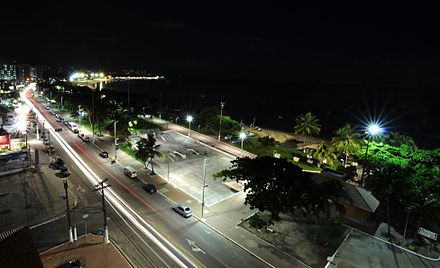
А гледката оттук надолу към града
Увличаща бе сякаш към течащата река
От цветни шлейфове и светлини, потоци от коли…
Тъй дишаше градът във ритъма на океанските вълни..
——————————————————————————————————————————————————————————————————————
♦♦♦
И в миг отвориха широко двойната врата.
Оттам се плисна на талази ярка светлина.
Приканиха ни, влезнахме във празно помещение
А на стената в дъното, за наше изумление
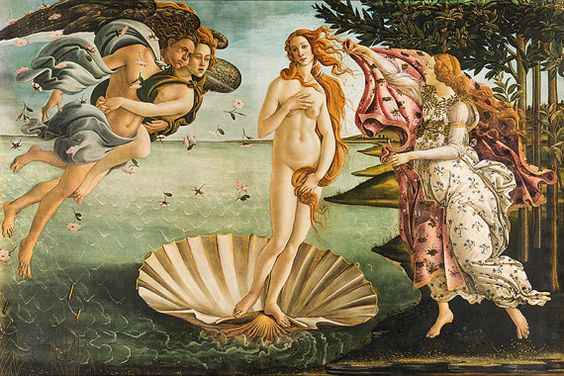
Бе в рамка „Раждането на Венера“, като че ли,
Оназ, прочутата творба на Ботичели.
——————————————————————————————————————————————————————————————————————————
Но Йеманджа се раждаше от морска пяна,
Красива, чернокоса, бяла и засмяна,
и сипеха се от ръцете й безброй звезди,
блестящи перли, рози и сияйни светлини.

——————————————————————————————————————————————————————————————————————————
♦♦♦
Край три атабаке, под тази картина,
застанал млад негър – към всяко, застинал.
Пристъпваме чинно до тях край стената.
В очакване тръпне на всеки душата.
В миг – жрицата влезе и даде сигнал,
Началото сложи на тоз ритуал –
Завтече се в кръг и запя монотонно
И тръгна след нея хорото изконно…
Трите атабаке във ритъм думтят,
Очите на всички танцьори пламтят.
Звукът се усилва, в стените отеква,
Но равната песен не спира, не секва.
И всичко това те въвлича, омайва,
Усещаш, че друг се във тебе спотайва
Сега ще изскочи, затропа и пее,
душата ти скрита навън ще излее.
И всички сме станали вече едно
Омотано, единно енергийно кълбо.
Тоз танц е тъй древен и толкоз първичен,
че движим се, дишаме в ритъм космичен.
♦♦♦
„Не, не, не трябва! Недей се поддава!
„Спри тази хипноза!“ – умът повелява.
И в миг се споглеждаме – всичко е ясно
Тук адски е диво, и врящо, и бясно,
Кръвта е гореща, очите червени,
И нерви обтегнати, тупкащи вени
О, бързай навънка, въздух не стига,
Хайде, разкъсай тази верига…
С труд се измъкваме, целите в пот,
там на терасата, под небесния свод.
Свежест, прохлада, звезди, широта
Дишай на воля и с лекота…
Въздишаме тихо – какво облекчение..
Но черната жрицата, кат бяло видение
Пристъпя към нас и ни пита тревожно-
Не ви ли се нрави, нима е възможно?
„О, не!“, отговаряме ние без поза –
„Интересанте! Мажико! Маравильозо!“
„Но време е вече да си вървим,
Че трябва и малко да си поспим.“
А тя ни отвърна, че „няма да може“,
Въпросът оказа се с отговор сложен.
Докато не дойде На пътя Ориша,
И не отключи портите скришом,
Няма как ние оттук да излезем,
Тъй че, пак в залата трябва да влезем.
Отново в котела със врящи тела
Да тупаме в крак с безброй ходила
Да пеем във ритъм на тез барабани
Провлачени звуци, слова неразбрани.
Отново да влезем във тази магия.
Побиват ме тръпки от страх, аз не крия…
♦♦♦
Завличат ни вътре горещи вълни,
Омайният ритъм душите плени
Засмуква телата танцът мистичен
Устата безмълвно заклинания сричат…
И в миг всички спират, на място застиват
Заглъхват тим-тами, сърцата се свиват.
Изпаднал във транс млад мъж се свлича,
Прегръща го нежно младо момиче,
Да легне на пода му бавно помагат,
Дори под главата възглавница слагат,
В конвулсии здравото тяло се свива,
По кожата капчици пот му избиват,
Треперят му всичките фибри и клетки
Нечувани звуци, невиждани гледки…
♦♦♦
Ето, че жрицата ни свести:
„Богът на пътя отвори врати“
После последва вечеря прощална,
Не обичайна, а ритуална…
Черен петел бе пожертван за нас
С него гощава ни в късния час…
♦♦♦
Ето със туй кандомбле ни ориса
Черната жрица в чест на Ориша,
На Йеманджа и на Вълната,
На Океана, на Реките и на Луната,
На Изворите и на Светлината,
на всичките Ориша, на Земята,
на всичко живо и на цялата Вселена,
която пак от нея е родена.
март 2016г.
 March 9, 2016
·
 dobrina ·
 Comments Closed
 Tags: Стихове - авторски КАНДОМБЛЕ · Posted in: Други, Публикации на български, Текстове на български
Biennale Architettura 2016
—————————————————————————————————————————————————–
The International Exhibition
The Exhibition REPORTING FROM THE FRONT will be laid out in a unitary exhibition sequence from the Central Pavilion (Giardini) to the Arsenale, and will include 88 participants from 37 different countries. 50 of them will be participating for the first time, and 33 architects are under the age of 40.
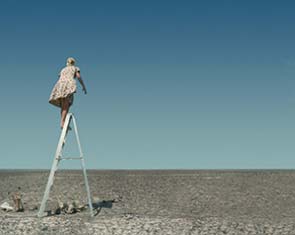
“The lady on the ladder who, climbing up onto the highest steps can gaze over a far broader horizon, and by doing so conquers an “expanded eye”, announces the Biennale Architettura 2016 curated by Alejandro Aravena. We immediately loved this picture – stated President Paolo Baratta – because in a way it represents la Biennale as a whole, with our attitudes and our goals.
“It is also in part a counterpoint to the image chosen for the most recent Biennale Arte. The symbol selected last year by Okwui Enwezor – Baratta noted – was Paul Klee’s famous “Angelus Novus” as interpreted by Walter Benjamin; the winged angel looking backwards in shock, seeing only the past and in the past, debris and tragedy, but also insights that could be useful some day, in a future towards which the hidden forces of providence are driving him, like a wind blowing on his wings.”
“What does the lady see? I think – commented Baratta -mainly desolated land comprising immense swathes of human habitation which no human could be proud of; great disappointments representing a sad, infinite number of missed opportunities for humanity’s ability to act intelligently. Much of this is tragic, much is banal, and it seems to mark the end of architecture. But she also sees signs of creativity and hope, and she sees them in the here-and-now, not in some uncertain aspirational, ideological future.”
“Is this a sign of optimism? We have often deplored, in previous Biennale Exhibitions – the President recalled – that our present time seems to be characterised by increasing disconnection between architecture and civil society. Previous Exhibitions have addressed this in different ways. This time, we wish to investigate more explicitly whether and where there are any trends going in the other direction, towards renewal; we are seeking out encouraging messages.”
“And we are not just interested in exhibiting concrete results for critical appraisal. We also want to see into the phenomenology of how these positive examples came about. In other words: what drives the demand for architecture; how are needs and desires identified and expressed; which logical, institutional, legal, political and administrative processes lead to demand for architecture and how they allow architecture to come up with solutions which go beyond the banal and self-harming.”
“Because this is clearly a serious impasse; not as much in architecture as a discipline, but in human organisation, in our ability to harness it, be saved by it and enter into dialogue with it.”
“We feel the need to highlight how positive outcomes have been achieved through the evolution of decision-making chains which link need – awareness – opportunity – choice – execution in a way that leads to a result where “architecture makes the difference”, as Aravena puts it.”
“We are not interested in architecture as the manifestation of a formal style, but rather as an instrument of self-government, of humanist civilisation, and as a demonstration of the ability of humans to become masters of their own destinies.”
“Architecture in action as an instrument of social and political life, challenges us to assess the public consequences of private actions at a more fundamental level.”
“Presenting architecture in action is also one of the answers to the permanent question raised by La Biennale. What is an architecture exhibition? – asked Baratta. And what should an architecture biennale be? In the Biennale Arte, which is the parent of the Biennale Architettura, the works are there in front of the visitors; with an architecture exhibition, the works are elsewhere. What should there be here? And indeed, the search goes on. We must avoid turning into a magazine, a convention, a critical essay, or a place for specialists alone: an exhibition just for architects. We also need to avoid condescension and falling into the trap whereby architects are tempted to present themselves as artists.”
“We need to engage with the public and with all possible stakeholders in the decisions and actions whereby our living spaces are created, both as individuals and as communities. As Architecture is the most political of all the arts – concluded the President – “the Biennale Architettura must recognise this.”
“In his trip to South America – related Alejandro Aravena – Bruce Chatwin encountered an old lady walking the desert carrying an aluminium ladder on her shoulder. It was German archaeologist Maria Reiche studying the Nazca lines. Standing on the ground, the stones did not make any sense; they were just random gravel. But from the height of the stair those stones became a bird, a jaguar, a tree or a flower. “
Aravena thus expressed his hope that the Biennale Architettura 2016 might “offer a new point of view like the one Maria Reiche has on the ladder. Given the complexity and variety of challenges that architecture has to respond to, REPORTING FROM THE FRONT will be about listening to those that were able to gain some perspective and consequently are in the position to share some knowledge and experiences with those of us standing on the ground.”
“We believe – explained Aravena – that the advancement of architecture is not a goal in itself but a way to improve people’s quality of life. Given that life ranges from very basic physical needs to the most intangible dimensions of the human condition, consequently, improving the quality of the built environment is an endeavour that has to tackle many fronts: from guaranteeing very concrete, down-to-earth living standards to interpreting and fulfilling human desires, from respecting the single individual to taking care of the common good, from efficiently hosting daily activities to expanding the frontiers of civilization.“
The curator’s proposal is therefore twofold: “on the one hand we would like to widen the range of issues to which architecture is expected to respond, adding explicitly to the cultural and artistic dimensions that already belong to our scope, those that are on the social, political, economical and environmental end of the spectrum. On the other hand, we would like to highlight the fact that architecture is called to respond to more than one dimension at a time, integrating a variety of fields instead of choosing one or another.”
“REPORTING FROM THE FRONT will be about sharing with a broader audience, the work of people who are scrutinizing the horizon looking for new fields of action, facing issues like segregation, inequalities, peripheries, access to sanitation, natural disasters, housing shortage, migration, informality, crime, traffic, waste, pollution and theparticipation of communities. And simultaneously it will be about presenting examples where different dimensions are synthesized, integrating the pragmatic with the existential, pertinence and boldness, creativity and common sense. “
“It is not easy – concluded Aravena – to achieve such a level of expansion and synthesis; they are battles that need to be fought. The always menacing scarcity of means, the ruthless constraints, the lack of time and urgencies of all kinds are a constant threat that explain why we so often fall short in delivering quality. The forces that shape the built environment are not necessarily amicable either: the greed and impatience of capital or the single mindedness and conservatism of the bureaucracy tend to produce banal, mediocre and dull built environments. These are the frontlines from which we would like different practitioners to report, sharing success stories and exemplary cases where architecture did, is and will make a difference.”
The Special Projects
The 15th International Architecture Exhibition will feature three Special Projects, the first promoted by La Biennale, the other two the result of agreements stipulated with other institutions, organized and realised by La Biennale itself.
The exhibition curated by architect Stefano Recalcati, titled Reporting from Marghera and Other Waterfronts, to be shown in the exhibition venues of Forte Marghera (Mestre, Venezia), will analyse significant projects for the urban regeneration of industrial ports, helping to fuel the debate on the conversion of production in Porto Marghera.
The collaboration agreement with the Victoria and Albert Museum of London takes its first step in the Applied Arts Pavilion at the Sale d’Armi in the Arsenale, with the exhibition entitled A World of Fragile Parts, curated by Brendan Cormier.
Finally, in view of the United Nations – Habitat III world conference, to be held in Quito, Ecuador, during the month of October 2016, and as part of the Urban Age programme, organized jointly by the London School of Economics and the Alfred Herrhausen Society, La Biennale will present, also in the Sale d’Armi, a pavilion dedicated to the themes of urbanisation – Report from Cities: Conflicts of an Urban Age – with particular attention to the relationship between public spaces and private spaces, curated by Ricky Burdett.
The programme of conversations about architecture
The Biennale Architettura 2016 will be accompanied throughout its duration by a wide-ranging programme of encounters to discuss the themes and phenomena presented in the Exhibition. Architecture Saturdays return this year with the architects and protagonists of the International Architecture Exhibition curated by Aravena, scheduled for every last weekend of the month. The “Special Projects” will also be enriched with a series of conversations and symposia to explore the issues they raise.
On July 16th and 17th, in Venice, the exhibition venues will host the annual Urban Age conference organized by the London School of Economics Cities, jointly with the Deutsche Bank’s Alfred Herrhausen Society. The complete programme of events will be announced shortly.
“Biennale Sessions”, the project for Universities
The Biennale Sessions project will be held again for the seventh consecutive year, following the success of its previous editions. This initiative is dedicated by La Biennale di Venezia to institutions that develop research and training in architecture, the arts and related fields, and to Universities and Fine Arts Academies. The goal is to offer favourable conditions for students and teachers to organize three-day group visits for fifty people or more, offering reduced price meals, the possibility to organize seminars free of charge at the Exhibition’s venues, and assistance in organizing their journey and stay. As of today, 53 international institutions from 13 countries and every continent have signed a protocol of understanding.
Educational
Educational activities will again be offered for the year 2016, addressed to individuals and groups of students from schools of all levels and grades, from universities and fine arts academies, and to professionals, companies, experts, architecture fans and families. These initiatives aim to actively involve participants in both Guided Tours and Creative Workshops.
Publications
The official catalogue, titled REPORTING FROM THE FRONT, consists of two volumes (format 21 x 27 cm). Volume I is dedicated to the International Architecture Exhibition, and is edited by Alejandro Aravena. Each project is presented on specific pages within the catalogue. In individual dedicated essays, Aravena introduces the architectural design, the author’s or Firm’s “approach”, describing the project’s specificities and explaining the reasons that led him to include the project in the Exhibition. The curator’s texts are accompanied by drawings, sketches, original manuscripts and repertory images by the various authors. Each section is also accompanied by short technical and biographical notes.Volume II is dedicated to the National Participations, the Collateral Events and the 3 Special Projects. Each section includes detailed texts dedicated to the individual projects, repertory images and renderings of the installations in the exhibition spaces.
The Exhibition Guide (one volume, format 10.5 x 27 cm) is conceived to accompany the visitor through the exhibition, thanks to its practical “pocket-sized” format. The projects and authors are published in the order in which they appear along the sequence through the spaces of the Exhibition.
The design of the graphic identity of the Biennale Architettura 2016 and the layout of the books are by Studio Elemental, Santiago de Chile. The books are published by Marsilio Editori.
The 15th International Architecture Exhibition was made possible by the support of Rolex, Partner and Official Watchfor the event, Artemide, Vela-Venezia Unica, Laminam, Ferrovie dello Stato Italiane, and JTI.
We would like to thank the Ministero dei Beni e delle Attività Culturali e del Turismo, the regional Institutions that each in their own way support La Biennale, the City of Venice, the Regione Veneto.
Our thanks go to our Donors, who are essential to the creation of the 15th International Architecture Exhibition.
And finally we would like to thank the highly professional staff of La Biennale, who work with such great dedication on the organization and management of the Exhibition throughout its six-and-a-half month duration.
Official website of the Biennale Architettura 2016: www.labiennale.org
Official hashtag: #BiennaleArchitettura2016
♣♣♣♣♣
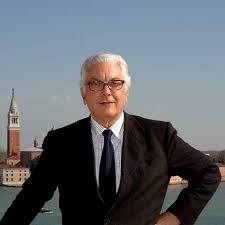
Introduction by Paolo Baratta, President of La Biennale di Venezia
The image behind the 15th International Architecture Exhibition, curated by Alejandro Aravena, shows a lady who has climbed the ladder; at the top she can gaze out to a far broader horizon, and thereby conquers her “expanded eye”.
We immediately loved this picture. Partly because it represents La Biennale as a whole, with all our attitudes and our goals.
It is also partly a counterpoint to the one chosen for the most recent Art Biennale. The symbol chosen last year by Okwui Enwezor was Paul Klee’s very famous “Angelus Novus” as interpreted by Walter Benjamin; the winged angel looking backwards in shock, seeing the past with all its debris and tragedy, but also with insights which could be useful in the future, towards which the occult forces of providence are driving it like wind blowing on its wings.
What does the lady see? I think mainly desolated land comprising immense swathes of human habitation which no human could be proud of; great disappointments representing a sad, infinite number of missed opportunities for humanity’s ability to act intelligently. Much of this is tragic, much is banal, and it seems to mark the end of architecture. But she also sees signs of creativity and hope, and she sees them in the here-and-now, not in some uncertain aspirational, ideological future.
Is this a sign of optimism?
Several previous Biennale’s Exhibitions have seen us deplore the present, which seemed to be characterised by increasing disconnection between architecture and civil society. Previous Exhibitions have addressed this in different ways. This time, we wish to investigate more explicitly whether and where there are any trends going in the other direction, towards renewal; we are seeking out encouraging messages.
And we are not just interested in exhibiting concrete results for critical appraisal. We also want to see into the phenomenology of how these positive examples came about. In other words: what drives the demand for architecture; how are needs and desires identified and expressed; which logical, institutional, legal, political and administrative processes lead to demand for architecture and how they allow architecture to come up with solutions which go beyond the banal and self-harming?
Because this is clearly a serious impasse; not as much in architecture as a discipline, but in human organisation, in our ability to harness it, be saved by it and enter into dialogue with it.
These complex questions touch on many fields.
They may be easily resolved for architecture which limits itself to creating isolated spectaculars.
But these are more complex questions if looked at from the point of view of land resources as a whole, and the life and working conditions of individuals or entire communities.
We feel the need to show how positive outcomes have been achieved through the evolution of decision chains which link need – awareness – opportunity – choice – execution in a way which brings about a result where “architecture makes the difference”, as Aravena puts it.
We are not interested in architecture as the manifestation of a formal style, but rather as an instrument of self-government, of humanist civilisation, and how it demonstrates the ability of humans to become masters of their own destinies.
Architecture in action as an instrument of social and political life, challenges us to assess the public consequences of private actions at a more fundamental level.
We are interested in the recognition that architecture is useful in catalysing the creation of public goods. From a technical point of view it is a public good itself (an asset whose usage by one person does not reduced the availability for others). As with all public goods, it should be the product of a direct public involvement, but it can also come about as a consequence of the higher sensibility of private investors, and while philanthropy is not a prerequisite here, other attitudes are: namely the knowledge of the multiple selves within each of us, and the awareness that the space in which we live is more important than the space we occupy.
Presenting architecture in action is also one of the answers to the permanent question raised by La Biennale. What is an architecture exhibition? And what should an Architecture Biennale be? In the Art Biennale, which is the parent of the Architecture Biennale, the works are in front of the visitors; with an architecture exhibition, the works are elsewhere. What should there be here? And indeed, the search goes on. We have to prevent ourselves from turning into a magazine, congress, critical essay, or a place only for specialists: just for architects. We also need to avoid condescension and falling into the trap whereby architects are tempted to present themselves as artists.
We need to engage with the public and with all possible stakeholders in the decisions and actions whereby our living spaces are created, both as individuals and as communities.
As Architecture is the most political of all the arts, the Architecture Biennale must recognise this.
La Biennale will involve a large number of meetings with architects and leaders in the presented fields; we would like not just to see the fruits of their labours, but also to hear them discuss their commitment.
In parallel with the main Exhibition curated by Aravena there will also be 62 exhibitions in pavilions belonging to the Countries participating, as well as several Collateral Events.
La Biennale di Venezia will also dedicate three pavilions to “Special Projects”: the first one is promoted by La Biennale itself, the last two ones are the result of special agreements concluded with other institutions.
In particular, the Forte Marghera Project Reporting from Marghera and Other Waterfronts curated by the architect Stefano Recalcati at Forte Marghera (in Mestre, Venice), will analyse significant industrial port regeneration projects, thereby contributing to the debate on Porto Marghera’s changing productive use.
The agreement with London’s Victoria and Albert Museum will see the applied arts pavilion at the Sale d’Armi in the Arsenale, with an exhibition curated by Brendan Cormier, A World of Fragile Parts.
Lastly, in view of the United Nations global Habitat III conference, to be held in Quito in Ecuador in October 2016, and in the context of Urban Age program, which is jointly organised by the London School of Economics (LSE) and the Alfred Herrhausen Society, we will create a pavilion dedicated to the themes of urbanization – Report from Cities: Conflicts of an Urban Age – paying particular attention to the relationship between public and private spaces, curated by Ricky Burdett. This year the annual conference organized by Urban Age will take place at the 15th Exhibition.
The Biennale Sessions project is already active: around 53 architecture faculties from all around the world have already signed up.
First of all we would like to thank the Ministero dei Beni e delle Attività Culturali e del Turismo, the regional Institutions which have supported La Biennale, the City of Venice, and the Veneto Region.
We would like to thank our Partner Rolex. Our thanks go to the Sponsors for their assistance and contribution, and Donors, who are so important in the creation of the 15th Exhibition.
Our special thanks to Alejandro Aravena and to all his team.
Lastly, many thanks to all the extremely dedicated professionals of La Biennale who have been working on the creation and management of the Exhibition over its 6 month run.
Paolo Baratta
http://www.labiennale.org/en/architecture/exhibition/baratta/
March 3, 2016
· dobrina · Comments Closed
Tags: Venice Biennale 2016; Paolo Baratta · Posted in: Актуална информация, Други, Публикации на други езици, Събития, Текстове на други езици, Фотографии
ИЗЛОЖБА exhibition EXHIBITION exposition EXPOSITION изложба
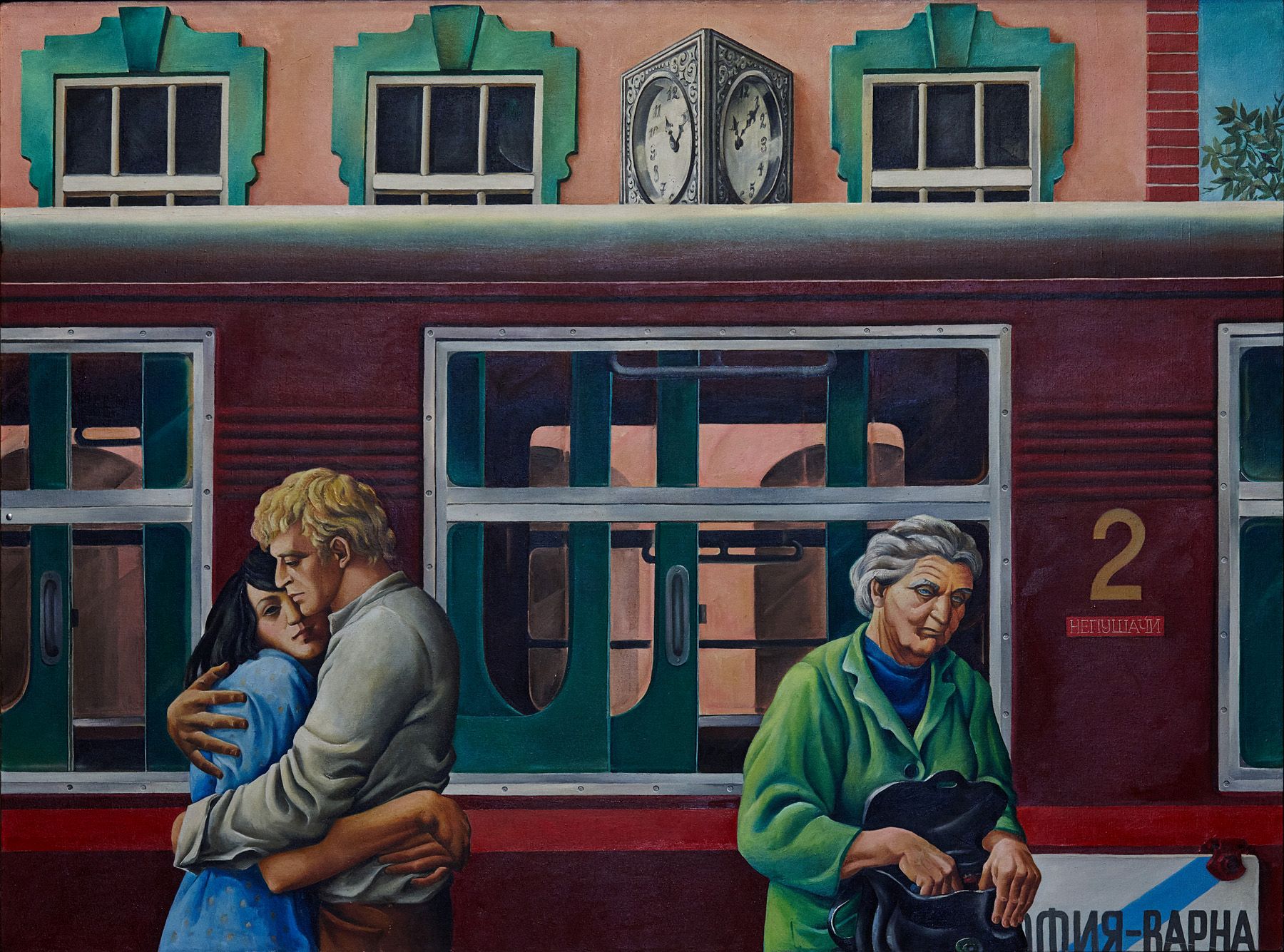
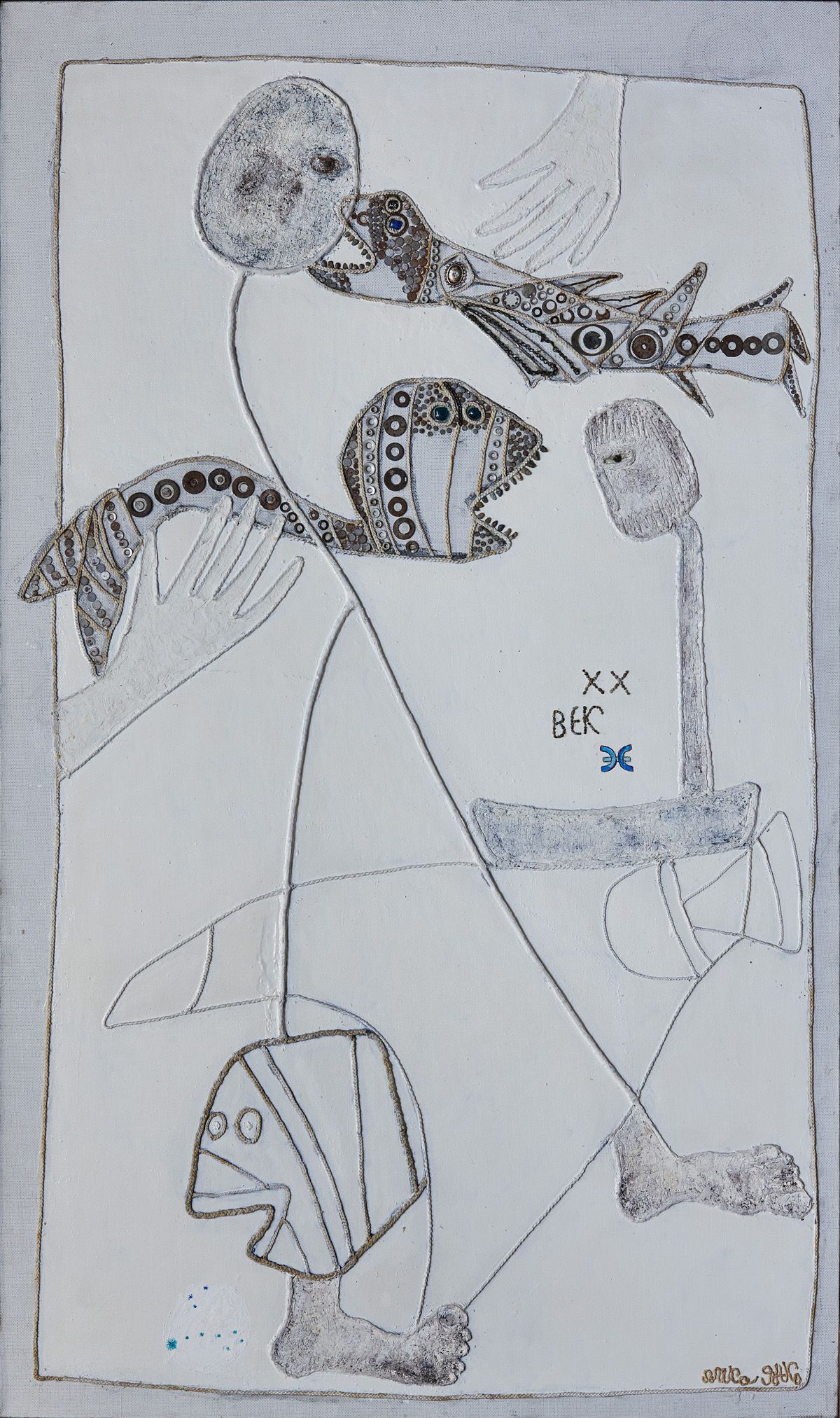
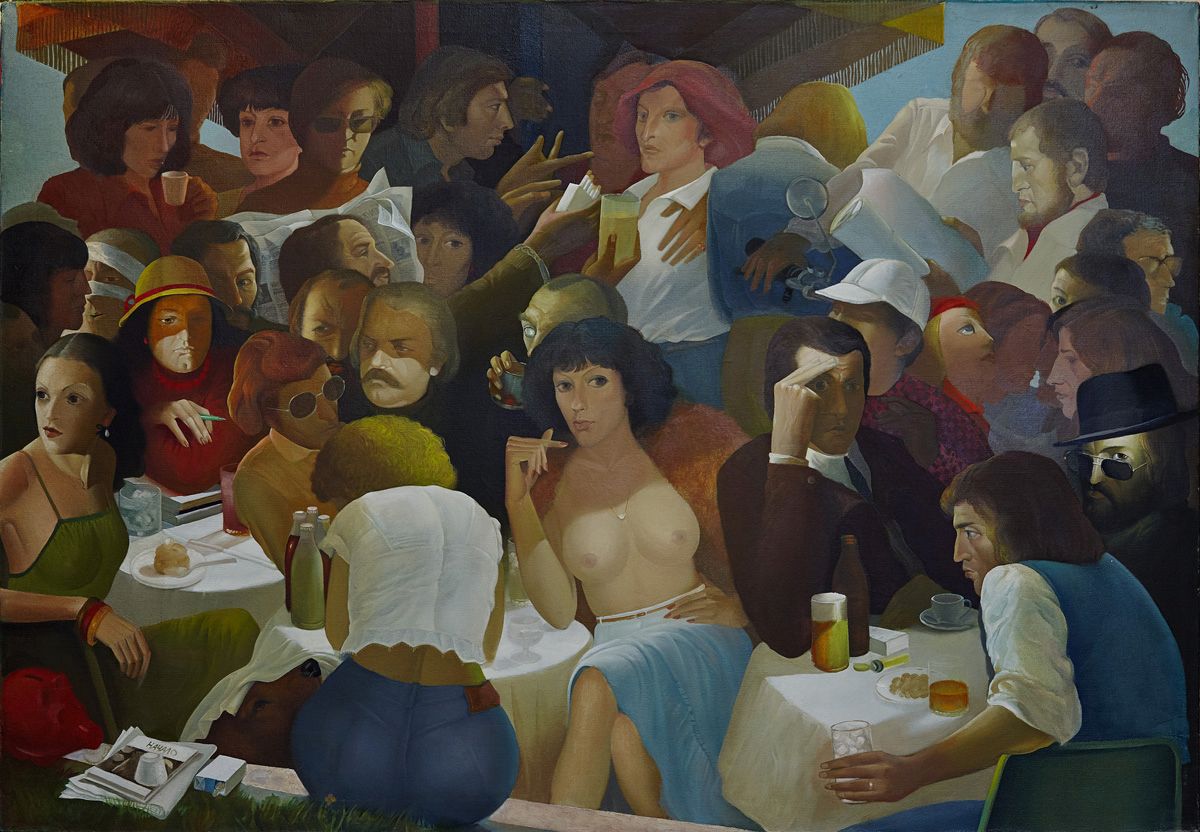
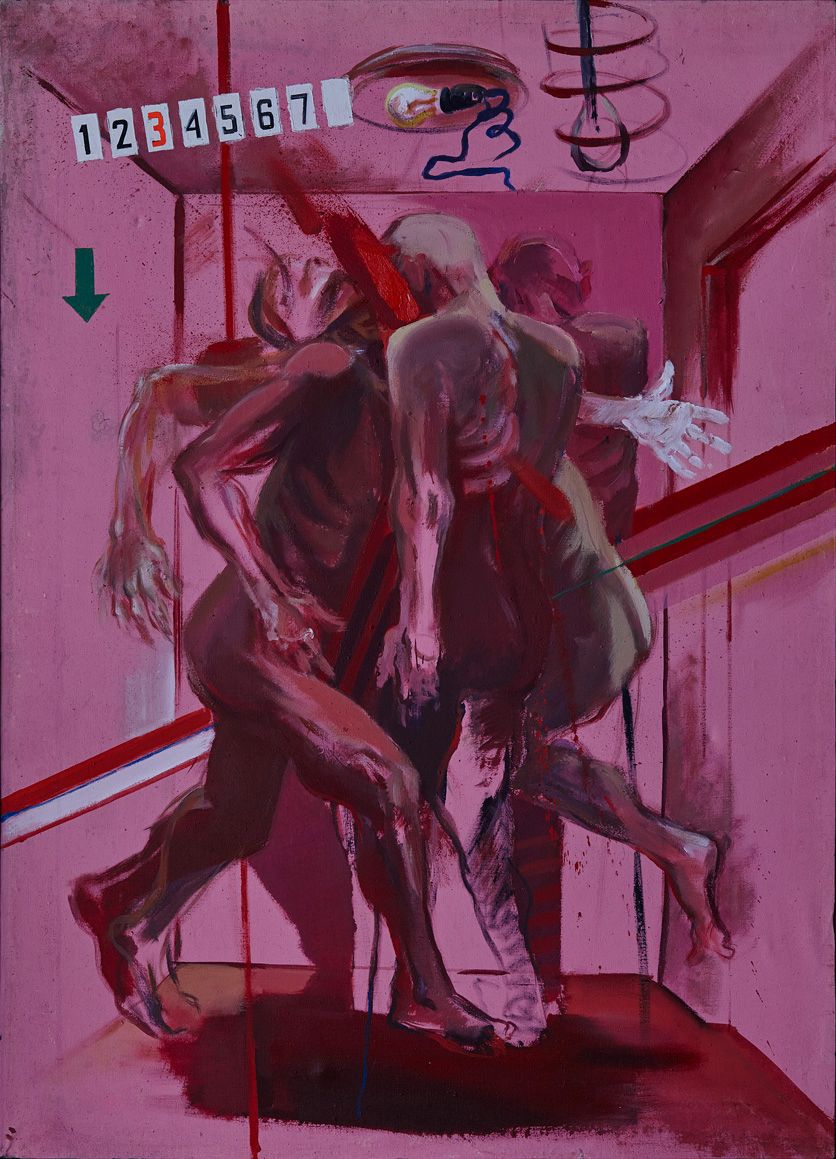
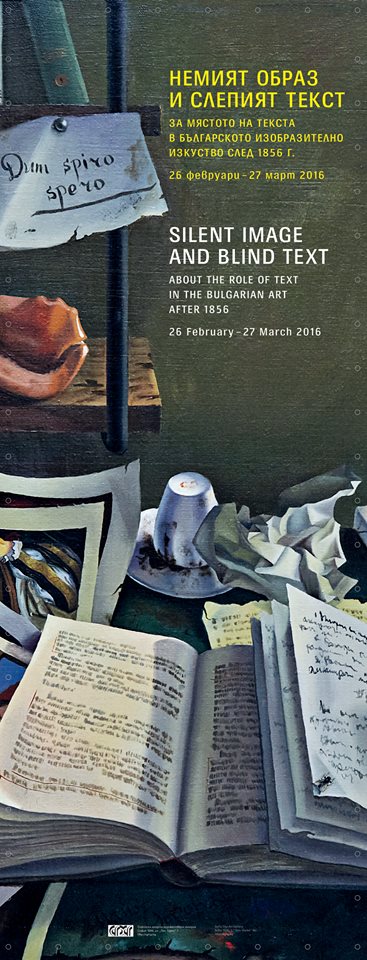
 На 25 февруари, четвъртък, от 18.00 часа, Софийската граска художествена галерия ще представи първата си изложба за календарната 2016 година. Кураторският проект “НЕМИЯТ ОБРАЗ И СЛЕПИЯТ ТЕКСТ” на младите изкуствоведи Пламен. В. Петров и Рамона Димова има за цел да разгледа и покаже мястото на тескта в българското изобразително изкуство след 1856 година до наши дни.
НЕМИЯТ ОБРАЗ И СЛЕПИЯТ ТЕКСТ*
За мястото на текста в българското изобразително изкуство след 1856 г.
Кураторски проект на Пламен В. Петров и Рамона Димова
26 февруари – 27 март 2016 г. Откриване: 25 февруари 2016 г., 18:00 ч.
Проблемът за взаимоотношенията между текста и неговото присъствие в пространството на светското изкуство, остава изключително фрагментарно изследван. Първият и като че ли единствен опит е проектът „Важно съобщение“, който е реализиран в СГХГ през 2006 г. от Мария Василева и Даниела Радева. В него авторките бяха фокусиран върху използването на текста в българското изкуство от края на 80-те години на ХХ в. до 2006 г. Факт е обаче, че текстът има своето място в картините на художници в страната ни още от ХІХ в. Ето защо изложбата „Немият образ и слепият текст. Мястото на текста в българското изобразително изкуство след 1856 г.“ е не само надграждане на проекта „Важно съобщение“, а и стремеж за обобщено оглеждане на взаимоотношенията между текст и образ в българското изкуство – от първите светски картини от ХІХ в. до най-новите творческия изяви от ХХІ в. Нещо повече, в изложбата е предложена възможна систематизация на физическото присъствие на текста в пространството на художествената творба, като са обособени четири големи тематични звена – „Пояснителен текст“, „Битие и текст“, „Намерение за текст“ и „Триумф на текста“.
Този проект е опит за преглед на физическото присъствие на текста (дори и маркерите за него) в българските пластически изкуства, като думата „текст“ в случая трябва да се разбира не само в смисъл на обособен писмен сбор от думи и изречения, а и като отделни думи, срички, буквени и цифрови графеми. В изложбата са подредени повече от 120 творби на автори, сред които Николай Павлович, Станислав Доспевски, Антон Митов, Иван Мърквичка, Никола Петров, Иван Милев, Николай Райнов, Борис Георгиев, Златю Бояджиев, Галин Малакчиев, Георги Божилов – Слона, Текла Алексиева, Румен Гашаров, Андрей Даниел, Недко Солаков, Лъчезар Бояджиев, Венцислав Занков, Надежда Олег Ляхова, Красимир Кръстев – Расим, Боряна Драгоева – Росса, Сашо Стоицов и др. Така експозицията предоставя възможност на публиката и изследователите както да проследят взаимоотношенията между текста и образа – тяхното проявление в различни исторически периоди и форми, така и да разкрият цялото многообразие от възможности, които любовта и раздорите между текста и образа дава на българските художници. Понякога учудващо близки, а друг път – неочаквано далечни.
В изложбата са включени произведения от фондовете на Национална галерия, Национална художествена академия, Народен театър „Иван Вазов”, Национален църковен историко-археологически музей, Съюз на българските художници, Музей за история на София, Градска художествена галерия – Пловдив, Художествена галерия „Владимир Димитров-Майстора” – Кюстендил, Регионален исторически музей – Благоевград, Художествена галерия „Димитър Добрович” – Сливен, Художествена галерия „Николай Павлович” – Свищов, Художествена галерия „Жорж Папазов” – Ямбол, Ателие-колекция „Светлин Русев” и частни колекции.
* Заглавието на изложбата е цитат от едноименната статия на доц. Елисавета Мусакова, публикувана на страниците на вестник Култура (бр. 21 (2276), 23 май 2003).
————————————————————————————————————————————————————————————————————————————
————————————————————————————————————————————————————————————————————————————-
Информация: Петър Димов, Връзки с обществеността
тел. 9872181;9812606, факс. 9811944 моб. 0878190324
e-mail: petardimov@sghg.bg http://sghg.bg
Peter Dimov, Public relations and events, Sofia City Art Gallery, phone. 9872181;9812606, fax. 9811944, mob. 0878190324
———————————————————————————————————————————————————————————————————————————–
Екип на проекта:
Пламен В. Петров и Рамона Димова – уредници на експозицията
Аделина Филева – Директор
Илинка Чергарова – реставрация
Александра Гогова – дизайнер
Любен Домозетски – уредник фонд “Живопис” и “Скулптура”
Светла Георгиева – уредник фонд “Графика”
Даниела Радева – уредник фонд “Съвременно изкуство и фотография”
Петър Димов – реклама
February 19, 2016
· dobrina · Comments Closed
Tags: Изложба; СГХГ; НЕМИЯТ ОБРАЗ И СЛЕПИЯТ ТЕКСТ; ЗА МЯСТОТО НА ТЕКСТА В БЪЛГАРСКОТО ИЗОБРАЗИТЕЛНО ИЗКУСТВО СЛЕД 1856 Г.;Кураторски проект на Пламен В. Петров и Рамона Димова · Posted in: Актуална информация, Други, Публикации на български, Събития, Текстове на български, Фотографии
АНОНСИ ANNOUNCES ИЗЛОЖБИ EXPOSITIONS EXHIBITIONS
НАЦИОНАЛНАТА ГАЛЕРИЯ
И ОБЩОБЪЛГАРСКИЯТ КОМИТЕТ „ВАСИЛ ЛЕВСКИ”
представят
ЛЕВСКИ – СИМВОЛ И ЕПОХА
Апостолът и неговото време през погледа
на българските художници
5 февруари – 20 март 2016 г.
Пл. „Княз Александър І” № 1
Уникалната изложба представя над 80 художествени произведения и 40 документа от епохата, свързани с образа, живота и делото на Васил Левски. Част от тях са непоказвани до момента.
ЛЕВСКИ никога няма и не може да бъде забравен!
ЛЕВСКИ е част от самочувствието на всеки българин!
ЛЕВСКИ продължава да вълнува и младите български художници, макар някои от тях да живеят далеч от Родината!
Широката панорама от художествени образи на Апостола представя различни поколения български художници. Най-възрастният от тях – Марин Георгиев Устагенов, е роден през далечната 1872 г. в Русе, а най-младият – Лазар Митев, е роден през 1996 г. в Пловдив. Експозицията включва живописни, графични и скулптурни портретни и многофигурни композиции. Специално внимание е отделено на темата: Сцени от народния живот. В този раздел са включени малко познати и непоказвани до този момент творби от колекцията на Националната галерия. В документалната част са включени уникални материали и фотографии на Апостола и негови съратници.
Акцент на изложбата е портретът на академик Дечко Узунов Огърлица на безсмъртието (1973). Между авторите изпъква името на Марин Георгиев Устагенов, посветил голяма част от своето творчество на предосвободителната епоха и на образа на Васил Левски. Неговото живописно платно Създаване на таен революционен комитет в Софийско е първо по рода си в българското изкуство и се показва за първи път пред зрителите. Своеобразен контрапункт на старите майстори-живописци е творчеството на съвременни художници като професорът в Националната художествена академия Пламен Вълчев, живеещият в САЩ Росен Райчев, познатият на ценителите на живописта в европейските културни среди Васил Горанов.
Изложбата ще бъде оживена и от изкуството на театъра чрез миниатюрата на режисьора Асен Шопов Разпитът на Васил Левски пред извънредната следствена комисия в София, с участието на актьорите: Веселин Плачков (в ролята на Левски), Васил Михайлов, Борис Луканов, Богдан Глишев и Иван Несторов. Посетителите на изложбата ще могат да видят постановката на 6 и 7, 13 и 14 февруари (събота и неделя) от 11.00 часа.
Спомоществовател на изложбата и каталога към нея е фондация „Братя Василеви“.
Маргарита Андреевска
„Връзки с обществеността” ———————————————————————————————————————————————————————————————————————————-
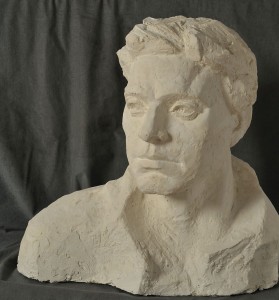
Лазар Митев,Васил Левски,2013,бюст, гипс
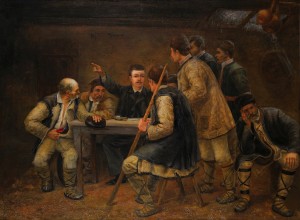
Марин Устагенов, Основаване на таен революционен комитет в Софийско
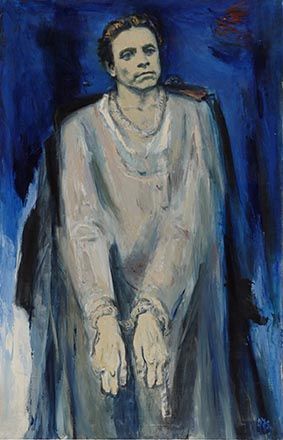
Огърлица на безсмъртието, Дечко Узунов
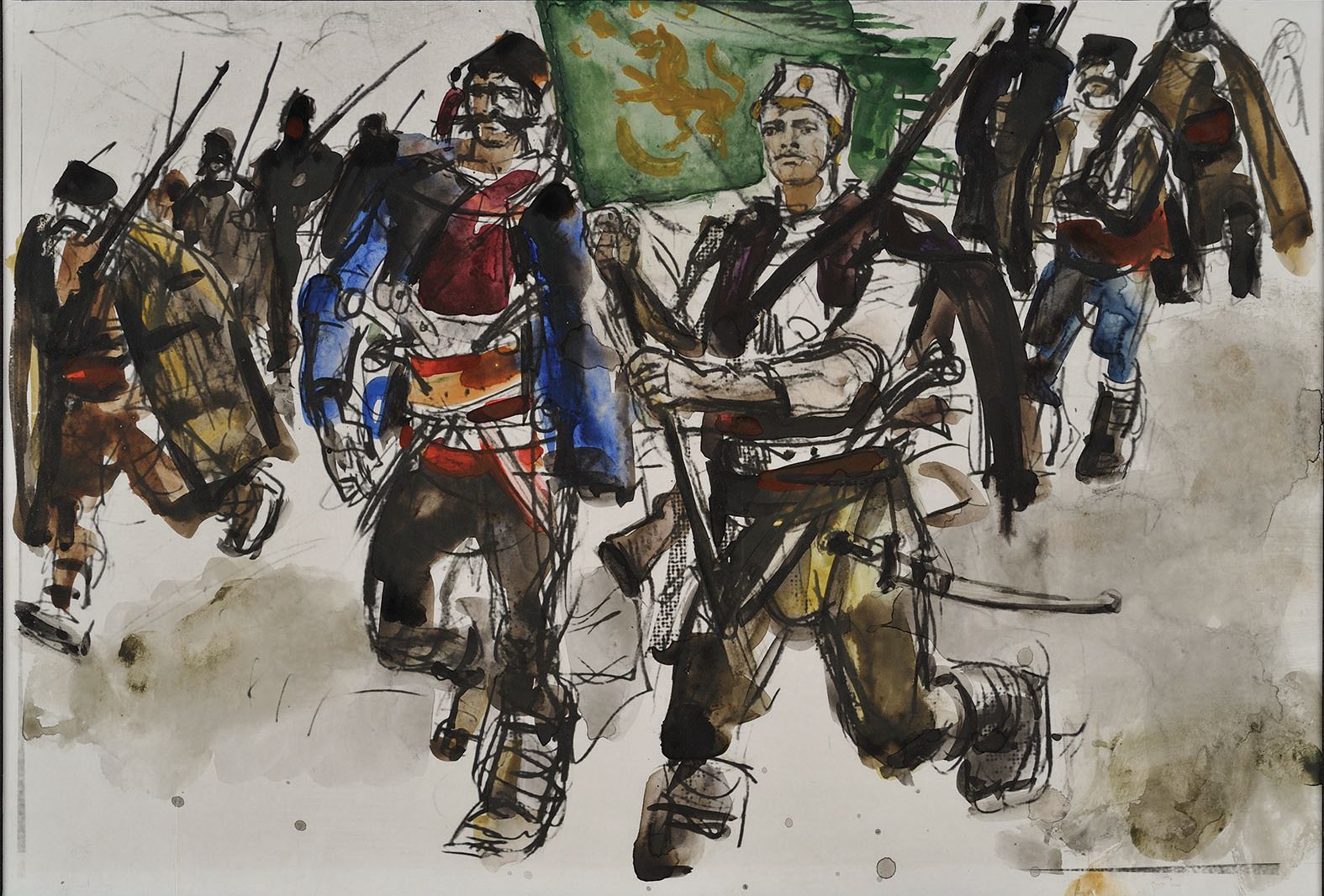 Христо Нейков, Левски знаменосец
———————————————————————————————————————————————————————————————————
НАЦИОНАЛНА ГАЛЕРИЯ – ДВОРЕЦА
представя:
БЯЛО „Зимата“
в колекцията на Националната галерия
5 февруари – 20 март 2016
Изложбата включва над 50 живописни композиции – предимно пейзажи и няколко жанрови сцени. Най-ранната показана картина е на Асен Белковски от 1899 г., а най-късната – на Никола Николов от 1985 г.
Избрани са представители на класическата, модерната и съвременната българска живопис, които работят в различни стилове и направления. Сред имената се открояват тези на: Ярослав Вешин, Асен Белковски, Александър Божинов, Борис Денев, Никола Петров, Сирак Скитник, Атанас Михов, Васил Стоилов, Никола Танев, Ненко Балкански, Здравко Александров, Златю Бояджиев, Милко Божков, Никифор Цонев, Ради Неделчев и други.
В творбите си те изследват както разнобразните прояви на природния феномен, така и различните емоционални състояния, които могат да се съотнесат към него.
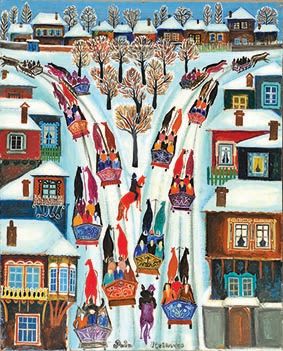
Зима, Ради Неделчев
………………………………………………………………………………………………………………………………………………………………………………………………………………………………………………………………………………….
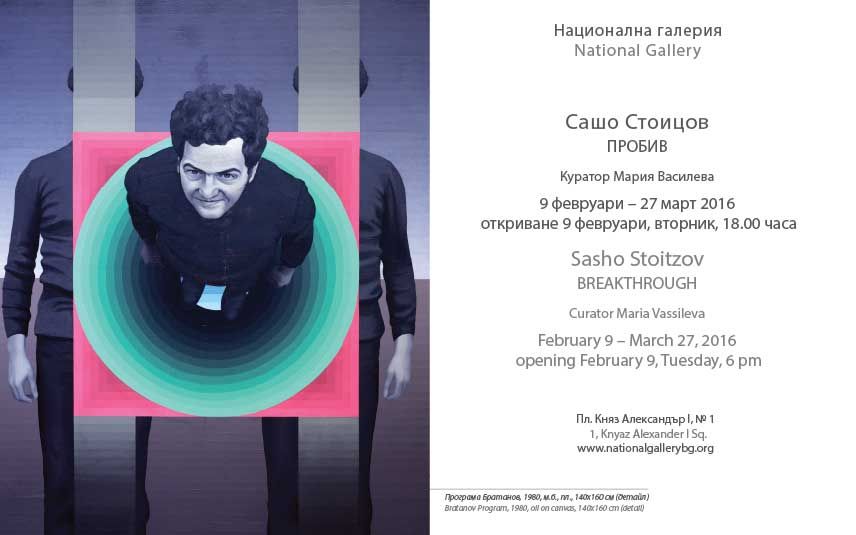
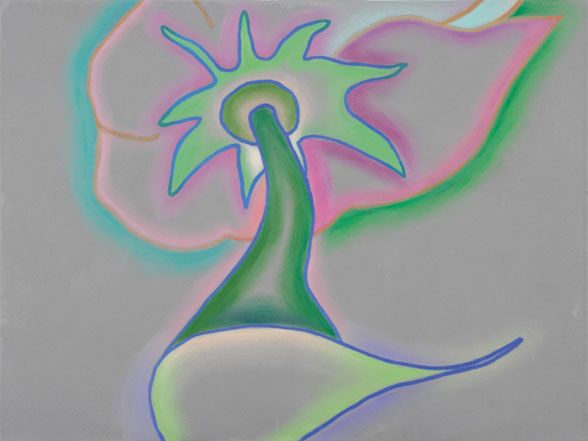
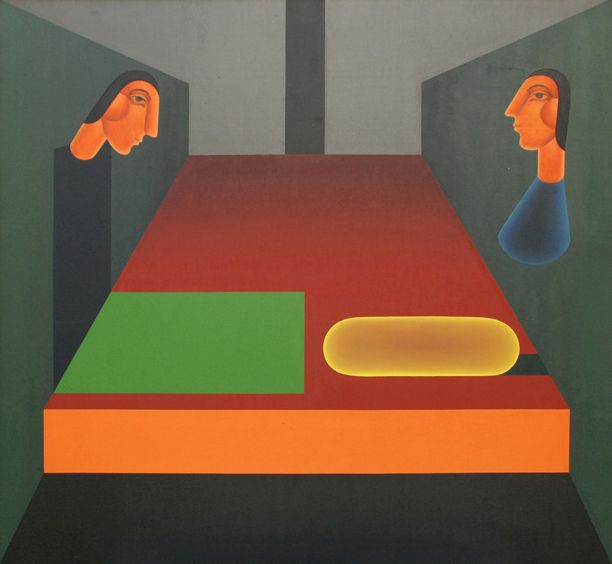
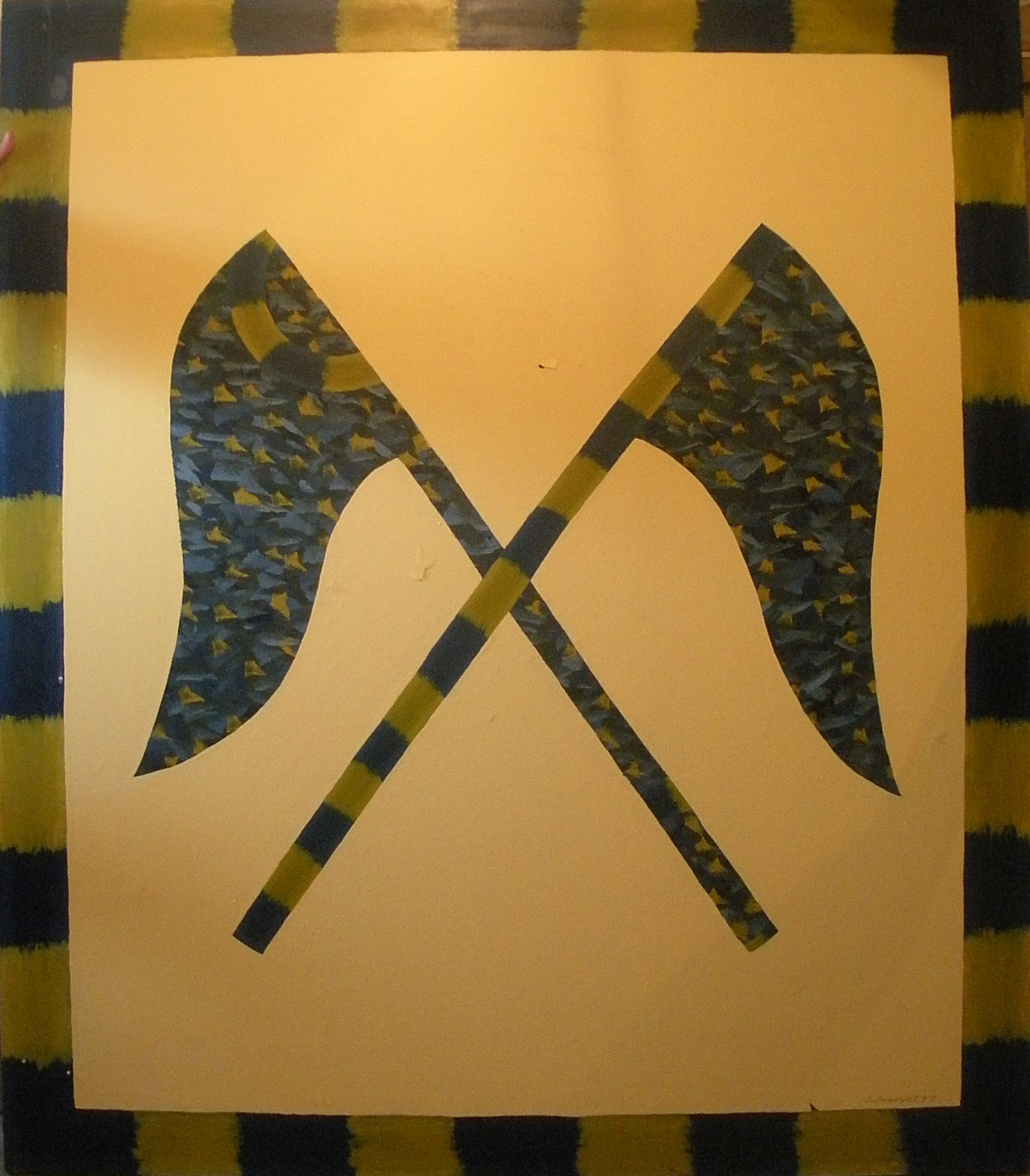
Сашо Стоицов, Без название 2007 Сашо Стоицов, Преминаване 1982 Сашо Стоицов,Знамена 1992
February 5, 2016
· dobrina · Comments Closed
Tags: ИЗЛОЖБА; ЛЕВСКИ – СИМВОЛ И ЕПОХА; Апостолът и неговото време през погледа на българските художници; · Posted in: Актуална информация, Други, Публикации на български, Събития, Текстове на български, Фотографии
SERDICA – SERDIKA – СЕРДИКА – СОФИЯ

Имам удоволствието да ви представя нощен изглед от адаптацията на археологическите останки на Сердика, между бул. “Княгиня Мария Луиза” и ЦУМ – снимка инж. Николай Василев
Фотографията е любезно предоставена от ръководителя на проектантския екип, арх.Юлий Фърков
January 25, 2016
· dobrina · Comments Closed
Tags: Археологическите останки на Сердика;адаптация;фотография;инж. Николай Василев · Posted in: Актуална информация, Текстове на български, Фотографии
АНОНС ПОКАНА ЗА ИЗЛОЖБА КRASSIM®ИР
Национална галерия
Софийски арсенал – музей за съвременно изкуство
Ви канят на изложба
КRASSIM®ИР
21.01. – 28.02. 2016
Куратор: Надежда Джакова
——————————————————————————————————————————————————————
Откриване: 21.01.2016, четвъртък, 18.00 – 20.00 часа
САМСИ, бул. „Черни връх” №2, www.samcaproject.org
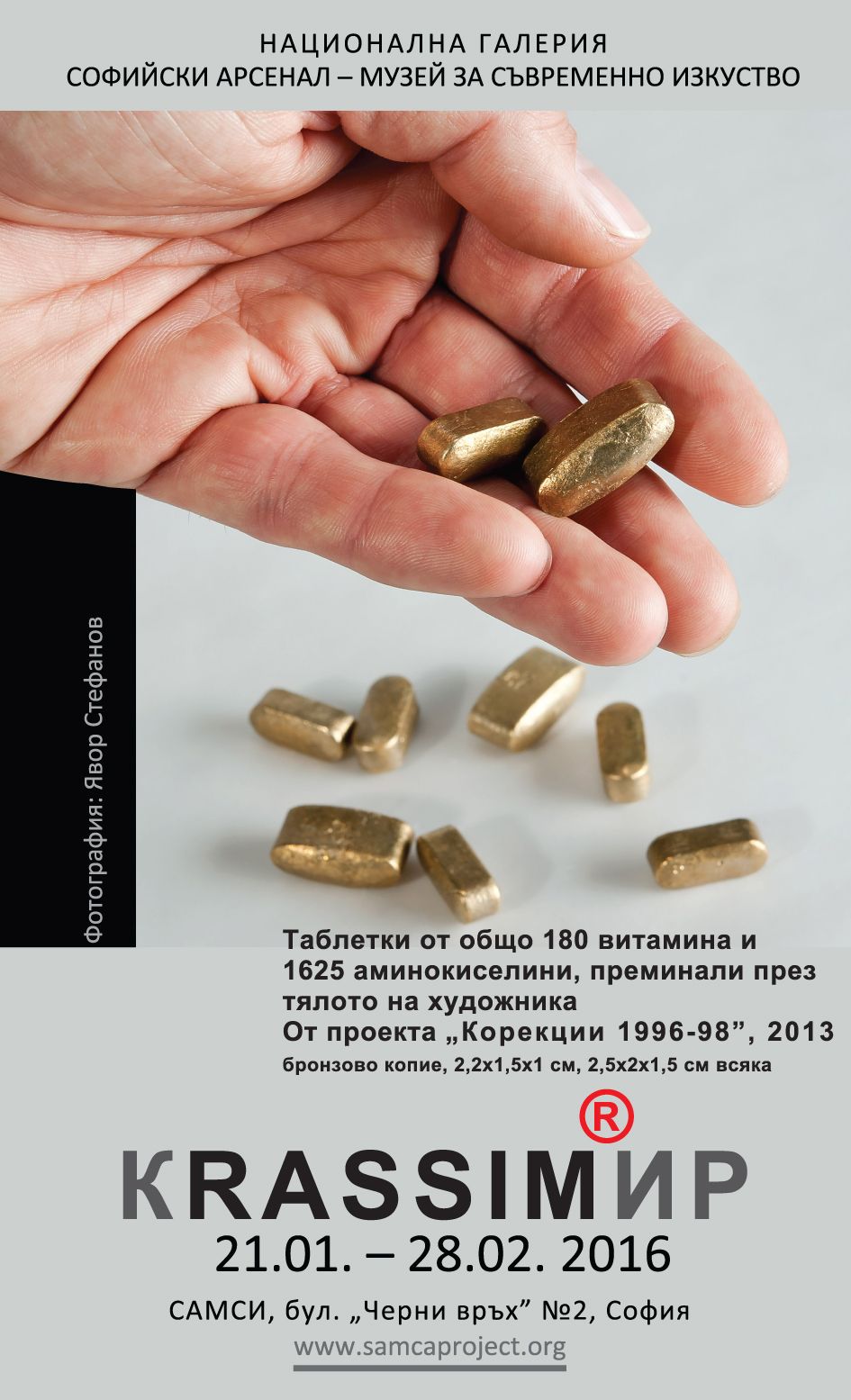
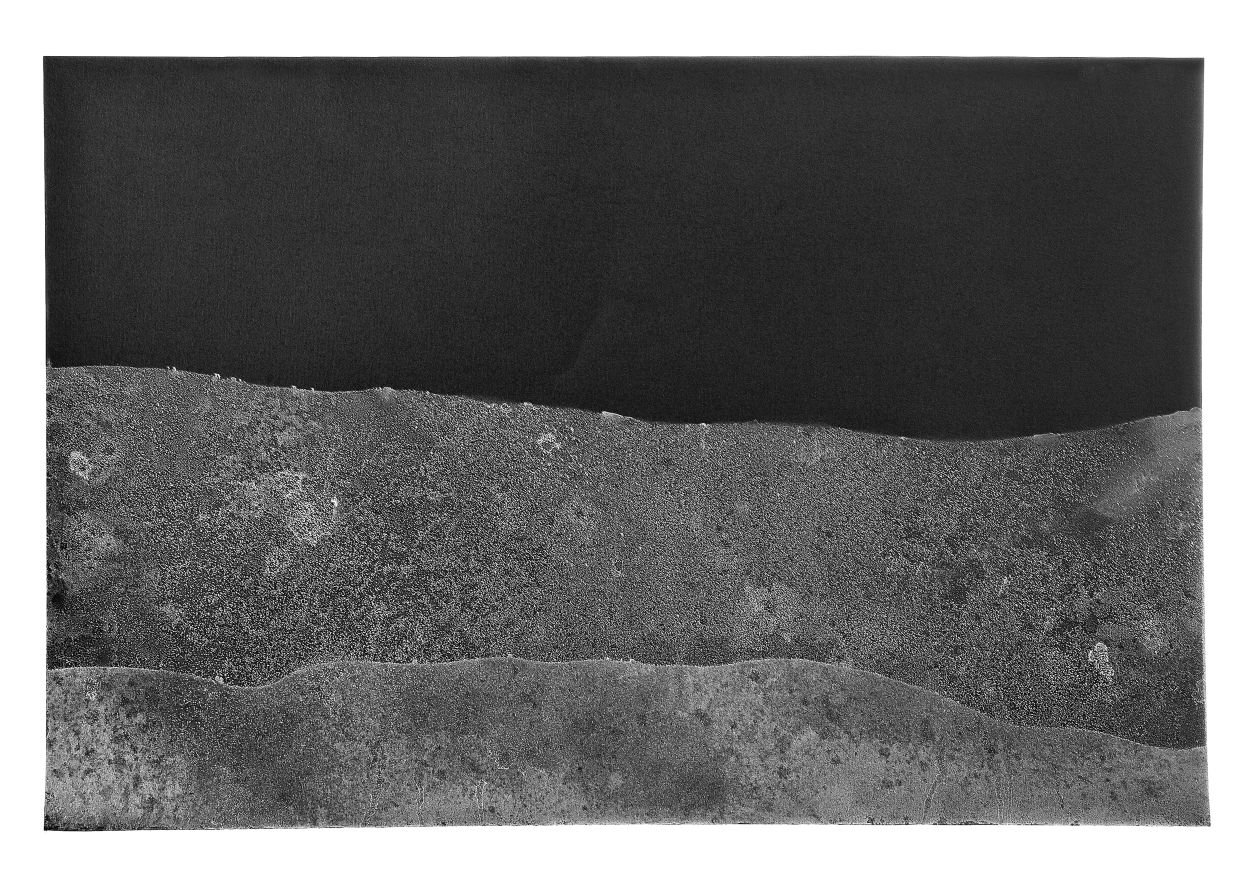
В настоящата изложба се представят творби от четири емблематични серии на художника RASSIM® – Красимир Кръстев, непоказвани досега в страната или малко известни на публиката. Включени са сериите Корекции 1996-98, Корекции 2, 2002, Органични картини и Маслена живопис, както и нови произведения – пейзажи с морска вода.
Изложбата КRASSIM®ИР е рефлексия върху изкуството на самопредставянето, поставя въпроси за себеизлагането, инсценировката, конструирането на собствен имидж. RASSIM® живее с огледалното си Аз в постоянна игра със себе си. Не може да избегне въпроса как ще бъде въприет от другите. Той назовава себе си, сменяйки името и така променя своята идентичност. Започва от Красимир, а след като манипулира тялото си, откривайки име в името си, се превръща в РАССИМ.
Сега е КRASSIM®ИР.
Това е изложба за публика, която е добре да бъде предварително информирана: www.rassim.com, http://www.medienkunstnetz.de/works/corrections/images/3/, http://2007.fotofestival.info/de/vita/?id=49&cpage=8,
http://www.goethe.de/ins/tr/lp/prj/art/kue/vid/ras/enindex.htm
Всяка сряда от 13 часа изложбата може да бъде разгледана в присъствието на автора.
Това е първата изложба от проекта „Автобиография” от програмата на музея за документиране на съвременно изкуство. Без да има ретроспективен характер, целта на проекта е да се назоват и подчертаят имена и произведения, променили изкуството ни от 90-те години на ХХ век насам.
За повече информация:
Надежда Джакова, samcaproject@samcaproject.org,
0879 834 030
January 18, 2016
· dobrina · Comments Closed
Tags: Национална галерия Софийски арсенал – музей за съвременно изкуство; КRASSIM®ИР; художника RASSIM® – Красимир Кръстев; изложба от проекта „Автобиография”; · Posted in: Актуална информация, Събития, Текстове на български
ДИЗАЙН – ИСКУССТВО – ПРОМЫШЛЕННОСТЬ / DESIGN. ART. INDUSTRY (3 issue) CALL FOR PAPERS


—————————————————————————————————————————————————————–
Dear Colleagues,
In 2016, the International collection of scientific papers in international index
ISSN 2312-6116 on ДИЗАЙН – ИСКУССТВО – ПРОМЫШЛЕННОСТЬ /
DESIGN. ART. INDUSTRY (3 issue) to be published.
The Materials of scientific articles issues will be available in a national information program-analytical system author RSCI / РИНЦ (Russian Science Citation Index) website: www.elibrary.ru
To be published Scientists and researchers from different countries are invited to cooperate in the international edition. The main objective is to provide publishing opportunities to exchange research results, experiences and ideas between members of different branches of the humanities and social sciences. Articles on the following issues and areas provided for the maintenance of the collection of scientific papers:
• theoretical and methodological aspects of the archaic, traditional and professional objective art;
• issues of historical and artistic evolution of the national traditional, arts and crafts, industrial and professional subject of art, design (in species diversity: textile, ceramics, glass, wood, metal, stone, bone, etc.);
• aesthetic values of world culture and folklore in the modern understanding;
• study of the evolution of societies and civilizations in human history and the history of everyday life;
• ethno genesis, ethno-cultural image of the people, the modern ethnic processes;
• historical and cultural integration of Eurasia;
• art and production;
• application to the legacy of World humanities;
• narrative as a universal characteristic of culture;
• technical and technological legacy of the ancient manufactures of historical production ( the experience of conservation, restoration and reconstruction);
• development of spatial specificity of architectural art in the era of modernism and postmodernism;
• social and environmental aspects of product design and environmental design;
• design of the urban environment and interior design;
• practical and theoretical aspects of light and colour design;
• modern technology in engineering design;
• digital technology and the “scientific art”;
• subject-dimensional filling environmental objects;
• design engineering in modern education;
Materials for publication (article, of not less than 6 pages) should be sent to the responsible editor of scientific publications Nataliya Shabalina by e-mail: folk.art2012@mail.ru
Deadline for application before February 1, 2016; the text of articles up to March 1, 2016.
————————————————————————————————————————————————————-
Supplement 1
Application Form
(filled in for each co-author and e-mail sent to a separate file called “Last name Application”)
Family name:
First name:
Degree:
Academic title:
Institution:
Department:
Research Interests:
Address:
City:
Country:
Telephone:
Fax:
Email:
Title of the article:
—————————————————————————————————————————————————————–
Supplement 2
Rules for article
(Article sent to e-mail as an individual file called «Last name Article»)
Article in Russian languages with shot characteristic and key words in English languages are accepted for publication. The completed and signed license agreement should be sent to the editorial office at the positive reviews of your article and payment (10 EUR for page of format A-4). You will be sent by e-mail account with details to pay for the publication of your article.
1. Use a word processor Microsoft Word for print article.
2. Page`s options: A-4 format, book orientation, without number of pages, without hyphenation, all fields – 2cm without header and footer, type – Times New Roman, number 14, line spacing – 1,5, full justification, indent – 1, 25. The text of the article may contain graphics, tables, drawings (black and white, without colour fill). The text of the article – full justification.
3. Design of articles:
The text of article starts with index UDK. The index of the library and bibliographic classification UDC (Universal Decimal Classification) – according to Russian qualifier.
4. The first line, right – the full names and surname of the author(s) / name, middle name and surname of the author(s);
The second line – title of the article – in capital letters;
Third line, left justified: Abstract Text (500 words);
Fourth line: Key words (6-8 words);
The text of the article at least 6 pages (without making the page numbering).
At the end of the article: References – in alphabetical order.
The references in the text are drawn as follows: [1; 2; 3, p. 105] – see sample. In a direct quotation must be in reference to indicate the page number.
References and sources are attached after the main text. The works are printed in alphabetical order by author name (or names of publications, for example, reference books, encyclopedias, etc.), the work of one author – in chronological order. References given in the language of publication.
Figures are presented in a format «Rtif». The resolution for black and white drawings of at least 200 dpi, colour – at least 300 dpi.
List of illustration to make a separate file. The text should indicate the numbering of the corresponding figures numbering the total list of illustrations in the text are allowed tables, diagrams with captions.
——————————————————————————————–
A sample of an article:
УДК 94(470.5) + 745.522 + 677. 074. 543
НАДОМНЫЙ ТРУД И КУСТАРНОЕ ПРОИЗВОДСТВО КАК ОСНОВА РАЗВИТИЯ УРАЛЬСКОГО ПРОМЫШЛЕННОГО КОВРОДЕЛИЯ В XX ВЕКЕ
Н. М. Шабалина
Domestic Work and Handicrafts as the Basis of Ural Industrial Carpet Weaving in the XX Century
N. M. Shabalina
В статье на основе регионального фактического материала – центров уральского ковроделия, рассматривается проблема взаимосвязанности двух форм производственной художественной деятельности – ручного надомного труда и мануфактурного, индустриального производства. Основное внимание автор акцентирует на аспекте исторической закономерности переходных форм художественной деятельности и ее дальнейшей трансформации.
Ключевые слова: уральское промышленное ковроделие, надомный труд и ручное ткачество, кустарное и индустриальное производство, художественная промышленность.
On the basis of regional factual material – carpet weaving centers of the Urals, the problem of interconnection of two forms of the production of artistic activity – the manual on home work and manufactories, and industrial production. Emphasis author focuses on the aspect of historical patterns of transitional forms of artistic activity and its further transformation.
Key words: Ural industrial carpet; home work and hand weaving; artisanal and industrial production; the art industry.
Развитию на Урале искусства ковроделия предшествовала многовековая предыстория ткачества, уходящая в древние пласты археологических культур [1, с.5]. Современными учеными реконструированы отдельные технологии производства нетканого и тканого полотна. В XVII веке на территории Зауралья сформировался центр канашинского ткачества и ковроделия, с начала XX столетия получает развитие еще один центр на степной территории Южного Урала – в Карталинском районе. В историографии по отечественному ковроделию уникальными изданиями до сегодняшнего дня остаются труды искусствоведа Е. Г. Яковлевой [2; 3, с. 105; 4, с. 36]… По архивным данным выпускались ковры по 55-ти рисункам, что свидетельствовало об орнаментальном разнообразии изделий. План по выпуску ковров из года в год повышался, и к 1965 году фактический объем продукции составил 4473 м2 [5, д. 91, л.7.]…
Список литературы и источников
1. Лозанова, Саша. Мястото на художниците-текстилци в промышленото производство // Българската художественна тъкан (50-те – 80-те години на XX век). – София, 2000. – С. 33–36.
2. Яковлева, Е. Г. Курские ковры / НИИ ХП. – КОИЗ, 1955. – 146 с.
3. Яковлева, Е. Г. Русские ковры / НИИ ХП. – М., 1959. – 148 с.
4. Яковлева, Е. Г. Ткани и ковры деревни Кармышево Башкирской АССР / Научно-исследовательский институт художественной промышленности. – М., 1966. – Вып. 3. – С. 105–119.
5. Объединенный государственный архив Челябинской области (ОГАЧО). Ф. Р–1009. Оп. 5. Д. 91. Л. 1–10.
6. Shabalina, N. Modern Art of Traditional Ural Crafts // The Artistic Traditions of Non-European Cultures, vol 2 / Edited by Bogna Lakomska. Polish Institute of World Art Studies & Tako Publishing House, Warsaw – Torun, 2012, p. 113–120.
References
1. Ahmerov, R.B. Ob istokah dekorativno-prikladnogo iskusstva bashkir. [About the origins of arts and crafts Bashkirs]. Ufa: Kitap,1996. 60 p.
2. Shitova, S.N. Vojloki, kovry i tkani u juzhnyh bashkir. [Felts, carpets and fabrics in southern Bashkirs]. Ufa, 2006. 85–115 pp.
3. Yanbukhtina, A.G. Dekorativnoe iskusstvo Bashkortostana. XX vek: Ot tamgi do avangarda. [Decorative Arts of Bashkortostan. XX Century: From Tamgas to Avanguard]. Ufa: Kitap, 2006. 220 p.
4. Yanbukhtina, A. G. Teurgija (shamanizm) – jazycheskij arhetip v duhovnoj tradicii bashkir. Svojstva ego projavlenija v semantike sovremennogo iskusstva [Theurgy (shamanism) is a Pagan Archetype in the Spiritual Tradition of Bashkirs. Properties of its Manifestations in Semantics of Contemporary Art]. Dizajn. Iskusstvo. Promyshlennost’. Mezhdunarodnyj sbornik nauchnyh trudov. Vypusk I, otvetstvennyj redaktor k.ist.n. N.M. Shabalina [Design. Art. Industry. The International collection of scientific papers. Issue I. Executive Editor Ph.D. N.M. Shabalina], Chelyabinsk, 2012, vol. 1, p. 184.
Trnsliteratsiya by e-mail : http://www.translit.ru/
January 12, 2016
· dobrina · Comments Closed
Tags: Call for papers; International collection of scientific papers; ДИЗАЙН – ИСКУССТВО – ПРОМЫШЛЕННОСТЬ / DESIGN. ART. INDUSTRY ; 2016; 3 issue · Posted in: Актуална информация, Други, Публикации на други езици, Текстове на други езици