

La Biennale di Venezia
La Biennale
13th International Architecture Exhibition Common Ground
29th August > 25th November 2012
13th International Architecture Exhibition Common Ground directed by David Chipperfield open from 29th August to 25th November 2012
preview: 27th 28th August; awards ceremony and opening: 29th August
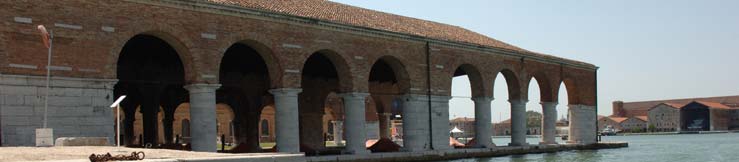
The Exhibition will be complemented by 55 National Participations organized, as usual, in the Pavilions at the Giardini, at the Arsenale and in the city of Venice. Four nations will be participating for the first time: Angola, the Republic of Kosovo, Kuwait, and Peru.
The Italian Pavilion at the Arsenale will be organized by the Ministry for the Cultural Heritage and Activities together with PaBAAC – the General Direction for the Landscape, Fine Arts, Architecture and Contemporary Art, and will be curated by Luca Zevi.
Official Collateral Events of the 13th International Architecture Exhibition will be presented by international subjects and institutions that will hold their exhibitions and initiatives in various locations around the city.
Common Ground will consist of a single exhibition through the Central Pavilion at the Giardini and the Arsenale: David Chipperfield will present an Exhibition with 63 projects, by architects, photographers, artists, critics and scholars. Many of them responded to his invitation with original proposals and installations expressly created for this Biennale, involving in their projects other colleagues with whom they share a Common Ground. There will be a total of 111 participants.
Introduction by the President of la Biennale di Venezia,
Paolo Baratta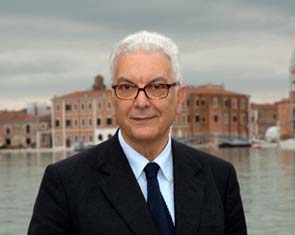
No other discipline like architecture lends itself and begs to be observed, studied and considered from various points of view. The International Architecture Exhibitions of the Biennale have charted it in the recent years: architecture as a reference point for city planning, the phenomenon of big cities, regional organization, the new need for projects that make the spaces we live in recognizable and give them signs of individual and collective identity… The many Biennale exhibitions of the past have alternated curators from the world of scholars and critics with curators who are architects themselves. Many architecture exhibitions have addressed architecture and environmental issues, architecture and social issues, architecture and technology, and each exhibition raises the question of the “point of view” from which we observe.
The Biennale has given growing importance to the Architecture Exhibition which is still young considering that the first Exhibition was held in 1975 and that the first edition that occupied the totality of the new spaces acquired by the Biennale at the Arsenale was held in 2000.
For this 13th Biennale we met David Chipperfield, well aware that he cultivates a very intense vision of architecture as practice. We felt it was important to look at architecture with a focus deep inside the discipline itself, to highlight the rich pattern of connections and associations, the intense dialogue between the architects of present and past generations, and their points of reference. This moment will be useful to reflect upon and represent architecture by concentrating our attention on it, in response to other visions that consider it almost as a brunch of other disciplines.
We believe architecture to be the art of organizing the space we share, and the expression “Common Ground” refers directly to this concept. Architecture is the tool for realizing the res publica, which is the place of individuals but belongs to everyone, it is the Artemis that metamorphoses private ownerships and desires into a public goods.
The present times and the events that have affected the world economy in recent years would also advise some reconsideration and reevaluation. We need only mention the interruption of many of the colossal projects announced in recent years, and architecture’s loss of momentum as an instrument that relies on technology to emphasize mainly the victories and achievements of the client. Perhaps the time has passed when architects were hired as demiurges for merely representative purposes, in contrast to civil and urban contexts and conditions that, in the meantime, were developing in contradictory directions.
In my conversations with David, I thought I detected a concern: a desire to recompose the identity of the architect in the face of the partially distorted use that has been made of his art, often with his complicity, and of the equally widespread mediocre and utilitarian use of non-architecture, not to speak of the squalid environments built in cities around much of our world.
To speak of architecture and its complexity, of its richness, of the questions it seeks to answer, can be useful to everyone, first and foremost because it may enhance a more qualified culture on the part of the clients, lacking which we are in danger of losing the meaning of things, of history and of real needs.
David Chipperfield will present an Exhibition with 58 projects, by architects, photographers, artists, critics and scholars. Many of them responded to his invitation with original project and installations expressly created for this Biennale, involving in their projects other colleagues with whom they share a Common Ground. The participants are 109 overall.
Let me add that 54 Countries will be participating in this Biennale including 4 new entries: Angola, Republic of Kosovo, Kuwait, and Peru.
For the third year in a row we are presenting an initiative which we consider to be of the greatest importance. A Biennale lasts three months, and we know that a high percentage of visitors belongs to the world of architecture in one way or another; many of them are young. We would like to be the preferred destination for visits organized by universities, lasting 3 consecutive days and culminating in a study seminar. Basically we would like the visit to become part of the students’ curricular activities: this is the goal that we pursue in the program entitled Biennale Sessions. It is an ambitious project, but the Biennale di Venezia wishes to remain a center for research, in which to observe, develop thoughts and elaborate, and a further step in the educational process of the new generations. 53 universities have already signed up for Biennale Sessions, and we have not yet come to the end of the school year.
During the exhibition, the Biennale will organize a program of Conversations about the Architecture, meetings dedicated to specific themes, issues and architects, to be held during the months of October and November.
My thanks to the Ministry of Culture, which at a difficult time for public finances is maintaining its decisive support, the local institutions that in various ways support La Biennale, the City of Venice and the Regione del Veneto. I extend out thanks to the authorities that are in various ways involved and concerned with the buildings in which we hold our Exhibition, from the Ministry of Defence to the Venice Soprintendenze.
I would like to thank also David Chipperfield’s team and the Biennale staff that will make possible the realization of the Exhibition.
Common Ground by David Chipperfield
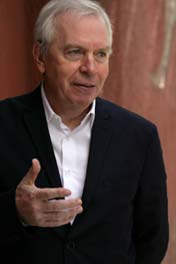 The emphasis of the 2012 Biennale is on what we have in common. Above all, the ambition of Common Ground is to reassert the existence of an architectural culture, made up not just of singular talents but a rich continuity of diverse ideas united in a common history, common ambitions, common predicaments and ideals.
In architecture everything begins with the ground. It is our physical datum, where we make the first mark, digging the foundations that will support our shelter. On the ground we draw the line that defines the boundary of what is enclosed and what is common. Today our relationship to the ground is no longer so direct, but it remains critical to our understanding of our place and where we stand.
The physical process of enclosure not only protects but also defines inside from outside, private from public, the individual from the community. As the world seems to increasingly indulge the aspirations of the individual, we seem to find the idea of community, the civic, the public, the common, more difficult to define.
We still long for the things in a city that suggest collective identity: great institutions, a downtown, piazzas and places of public theatre. Our cities can be interpreted as the physical form of a dynamic struggle between the individual and the collective. The radical visions proposed and realised by the modern movement never replaced the conventional images we use to represent our idea of public and private: the street, the square, the arcade, the boulevard.
Our contemporary, ambiguous public realm of consumption, travel and leisure, is shaped by criteria that tend to contradict the impossible but irresistible idea of a formally expressed, meaningful societal order.
The territory of architecture has been reduced in many cases to conforming to regulations, maximising size and density on a given site, and achieving some vague sense of compatibility with the context.
Against this background we try to maintain ideas about the public realm, but they manifest themselves most frequently in choreographed retail opportunities for office workers or leisure shoppers. In this inevitable and never ending struggle to give identity to spaces that conform to ever more subtle shades of grey between private and public, the tools and words we use can seem crude and ungainly.
Common ground (as opposed to public space) infers a territory that is shared within a context of difference. The theme identifies the search for the shared within the apparently diverse, and helps us to imagine strategies to deal with our common predicament and our strangely persistent need to feel part of a world bigger than the one required for our individual comfort.
Common Ground of course also refers to the ideas that we share about architecture, within and beyond our own professional boundaries. The title invites us to consider how these shared perceptions, concerns and expectations may be better directed.
Architecture requires collaboration. It is difficult to think of a peaceful activity that draws upon so many diverse contributions and expectations. It involves commercial forces and social vision, and it must deal with the wishes of institutions and corporations and the needs and desires of individuals. Whether we articulate it or not, every major construction is an amazing testament to man’s ability to join forces and make something on behalf of others. The fact that this effort is so often regarded as negative rather than amazing is a communication failure on our part.
The role of the architect is at best one of critical compliance. Architects can only operate through the mechanisms that commission them and which regulate their efforts. Our ideas are dependent on and validated by the reaction of society. This relationship is not only practical but concerns the very meaning of our work. In the increasingly complex confrontation between the commercial motivations of development and our persistent desire for a humane environment there seems to be little dialogue. If architecture is to be more than the privileged, exceptional moments of our built world, we must find a more engaged collaboration of talents and resources.
Good architecture gives examples and inspires us. It doesn’t happen naturally: it requires a conspiracy of circumstances and participants. While architects can provide ideas, the relevance and importance of these ideas depends on an engagement with society. The tendency to define the role of the architect as either an antagonist or a service provider only reinforces the problem and sabotages the potential of architecture itself.
Architecture has always been an act of resistance, resistance to the elements and the forces of chaos. Architecture offers refuge and can create a world within a world, giving order and meaning through the significance of its efforts. Surely it is the commonality of these efforts that rewards us all?
Within the context of the Architecture Biennale, ‘Common Ground’ evokes the image not only of shared space and shared ideas but of a rich ground of history, experience, image and language. Layers of explicit and subliminal material form our memories and shape our judgements. While we struggle to orient ourselves in a continuously changing world, what we are familiar with is an inevitable part of our ability to understand our place. It is critical that our expectations and our history don’t become a justification for sentimentality or resistance to progress. We must therefore articulate better our evaluations and prejudices if we are not to regard what has come before as something to escape and if we are to give value to a cumulative and evolving architectural culture rather than a random flow of meaningless images and forms.
The theme of ‘Common Ground’ allows us to engage with these themes, provoking us to think about the physical expression of our collective aspirations and ideas of society. It reminds us of our shared history and encourages us to think about the collaborative nature of architecture and the extraordinary potential of its collective process.
I am grateful to the participants who have so eagerly engaged in this demonstration of the shared, the common and taken time to engage in dialogue and present their ideas.
Biennale Sessions
For the 13th International Architecture Exhibition, la Biennale di Venezia addresses universities, academies of fine arts and secondary schools with a special project.
• la Biennale di Venezia looks at the Exhibition as the place where universities, academies of fine arts, secondary schools as well as research institutes can plan a visit especially designed for their educational activities;
• la Biennale di Venezia aims at providing these institutions with favorable conditions to organize such visits.
La Biennale offers each group of 50 persons (teachers and students included) belonging to one single institution:
a. a 20 € special pass per student giving access to the Exhibition venues for three consecutive days;
b. a location, free of charge, for a seminar to be organised by the same institution in one of the Exhibition’s venues, together with their facilities (the press preview days are not included);
c. special access conditions during the Architecture Exhibition for all the events and initiatives organized by Music, Theater and Cinema sections;
d. a pocket lunch at a discounted price during the three-days period in the Exhibition’s snack areas and restaurants;
e. help in organizing your stay with la Biennale’s affiliated operators;
f. participation to conferences and other events organized by la Biennale in the Exhibition’s venues;
g. a special promotion and communication plan, including links to the web pages of the participating universities.
For further information
Educational e promozione / la Biennale di Venezia
S. Marco 1364/A, 30124 Venezia, Italy
Tel. +39 041 5218828 – Fax +39 041 5218732
biennale.sessions@labiennale.org
http://www.labiennale.org/en/architecture/
 June 25, 2012
·
June 25, 2012
·  dobrina ·
  Comments Closed
 Tags: la Biennale di Venezia;13th International Architecture Exhibition Common Ground;David Chipperfield; Biennale Sessions · Posted in: Актуална информация, Други, За студентите, Публикации на други езици, Събития, Текстове на други езици, Фотографии